Practical Project Thinking
Why the earliest project conversations matter more than many people realize
Practical design starts before drawings begin, and that early thinking often shapes the success of everything that follows. In many commercial, healthcare, educational, nonprofit, and existing-building projects, the first valuable step is not jumping into plans too quickly. It is stepping back, asking better questions, and understanding what may actually make sense before design moves too far ahead.
A project can look promising at first glance and still carry constraints that affect cost, timing, approvals, or long-term usability. That is one reason I have always believed that design should begin with practical clarity, not abstract language. Owners and operators usually do not need more complexity in the early stage. They need a clearer understanding of what they are stepping into.
As a licensed architect coming from a second-generation general contractor background, I tend to look at projects through both lenses. I care about the design, but I also think about how decisions may play out in the field, how existing conditions may affect the work, and where coordination issues may start to surface.
Good design is not only about ideas on paper
There is nothing wrong with strong design ideas. But in real projects, especially renovations, fit-outs, and occupied-space work, ideas need to be tested against reality early.
That means looking at questions such as:
- What are the actual conditions of the building or space?
- Are there code, access, or filing issues that may shape the direction of the project?
- Are there hidden constraints that could affect budget or schedule?
- Does the concept align with how the space will really be used?
- What may be straightforward in a sketch but more complicated in construction?
These are not negative questions. They are productive questions. In many cases, they help owners avoid wasted time, redesign, and preventable frustration later in the process.
Practical design is not about making a project less creative. It is about making it more grounded, more coordinated, and more likely to succeed.
Existing buildings require careful reading
This is especially true in existing buildings, where conditions are rarely as simple as they first appear. Ceiling space may be tighter than expected. Structure may limit layout options. Mechanical, plumbing, or electrical systems may affect what can realistically be done. Access, phasing, tenant impact, or ongoing operations may also shape the design approach.
In these situations, early awareness matters. A project does not become better just because drawings begin quickly. It becomes better when the right questions are asked early enough to guide the drawings in the right direction.
That is often where a practical early conversation adds real value. It helps create a more realistic starting point.
Practical thinking supports better coordination later
One of the strongest benefits of early practical thinking is that it helps support coordination later. When design begins with a better understanding of real conditions, project goals, likely constraints, and approval paths, the process tends to move more clearly.
That does not mean every issue can be predicted. It does mean that fewer surprises are created by rushing past the early stage.
For owners, tenants, operators, and institutions, that can lead to better decision-making from the start. It can also help create a project that is not only well designed, but better aligned with construction realities, schedule expectations, and day-to-day use.

A better project often starts with a better first conversation
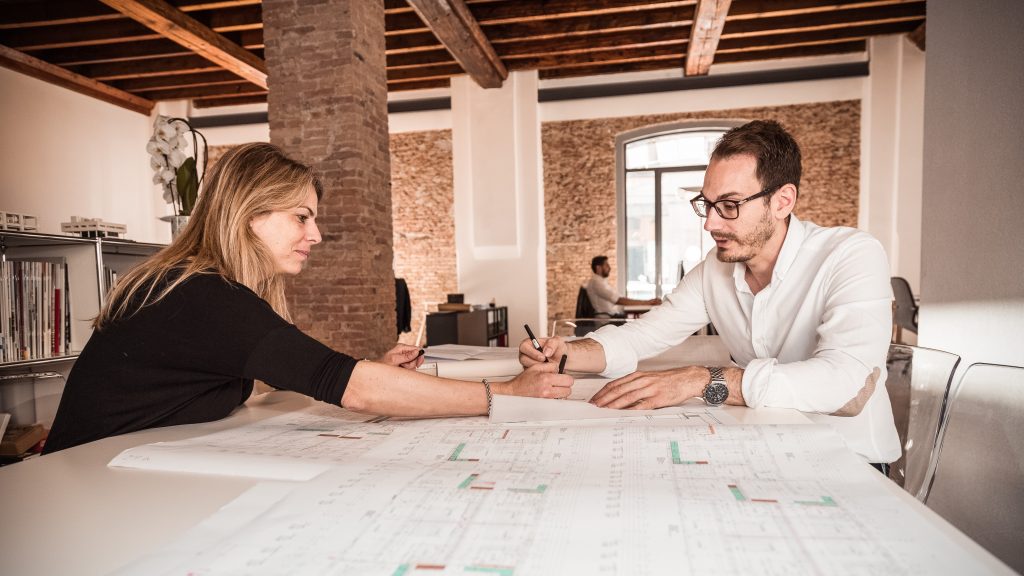
In my experience, some of the strongest projects start with a calm, practical conversation before full design begins. That conversation may clarify goals, surface constraints, identify risks, and help determine whether the project is ready for the next step.
That kind of clarity is valuable in commercial interiors, healthcare spaces, educational facilities, nonprofit environments, and other existing-building projects where practical coordination matters.
Good design should look right on paper. It should also make sense in the field.
Sometimes the best way to move forward is to get clearer before moving forward. Early clarity, and better questions at the start, can help support a much stronger project overall.